Best Practices
School Health Appraisal Programme
- To assessing the health status of the students studying in band of JSS educational institutions which include, pre schools, primary and secondary schools, pre university colleges and degree colleges.
- To provide on the spot treatment to the illnesses and to refer the students in the need of special care to higher centers.
- To educate the students regarding prevention of illnesses, promotion of health.
The underlying principle of this programme is to identify preventable morbidities among adolescents and educate them regarding avoiding of these conditions.
Context
School health is an important aspect of preventive medicine. There is an ample of evidence to prove that school health service is an economical and powerful means of raising community health and more importantly in future generations. The school health appraisal is a comprehensive health care of children that includes prevention of diseases, promotion of healthy lifestyle, treatment of ailments provided in a blended manner at an affordable cost. Common ailments among children of this age group include malnutrition, skin disorders, dental illnesses, mental illness, refractive errors, infections and infestations.
Most of these illnesses can be easily detected and treated at the earlier stages of their development so that the long term consequences can be avoided. Apart from posing danger to health of the child these illnesses can hinder their scholastic performance of the school children leading to the reduced socio economic output from them. This age group is a potential target for lifestyle interventions for ensuring their well being.
The Practice
Department of Community Medicine, JSS Medical College is undertaking annual school health appraisal programme for all the children studying in around 95 schools under JSS Mahavidyapeetha spread across four districts of South Karnataka, namely, Mysuru, Mandya, Chamarajanagara and Hassan. On an average around 15,000 school children receive benefit from this programme. A team from the Department consisting of, an Assistant Professor, Medico Social Worker, Post Graduate students, interns and attender visit schools as per a pre fixed schedule and undertake the exercise. Anthropometric measurements like, height, weight, chest circumference of all the children are assessed using standardized instruments. Refractive errors are assessed using Snellen’s charts designed in both English and Kannada language. Health check up of the children including general physical examination, Ear, Nose Throat examination, systemic examination like respiratory system, cardiovascular system, central nervous system, gastrointestinal system and genitor-urinary system are undertaken in a systematic way.
The detected ailments are treated on the spot and the conditions requiring specialized care are referred to the JSS hospital for further management. The referred children are followed up to know the outcome of health appraisal. This opportunity is also utilized to educate the school children on preventable morbidities, life style modification, nutrition, personal hygiene, menstrual hygiene, smoking, alcoholism, life skills etc. The children will get ample of opportunities to interact with interns, postgraduates and faculty from medical college. Apart from health related issues, aspects of healthful school environment like, location of school lighting, ventilation, types of desks, play ground, recreation facilities, maintenance of toilets, general sanitation, eating establishments are thoroughly assessed.
The data collected in school health card will be entered in MS Excel and analysed. The comprehensive report with conclusions and recommendations are communicated to the respective schools in a fortnight after the health check up. Swachh Bharat-Swachh Vidyalaya was a campaign for clean schools where the school children were educated on importance of cleanliness, how to reduce, reuse and recycle the waste generated in the schools and their homes. At the same time, the school teachers were also educated on the ways to involve school children in ensuring swachh bharat. Few research projects on heavy school bags, depression, suicidal tendencies among school children, assessment of adolescent obesity, student friendly school initiatives etc are undertaken.
Evidence of Success
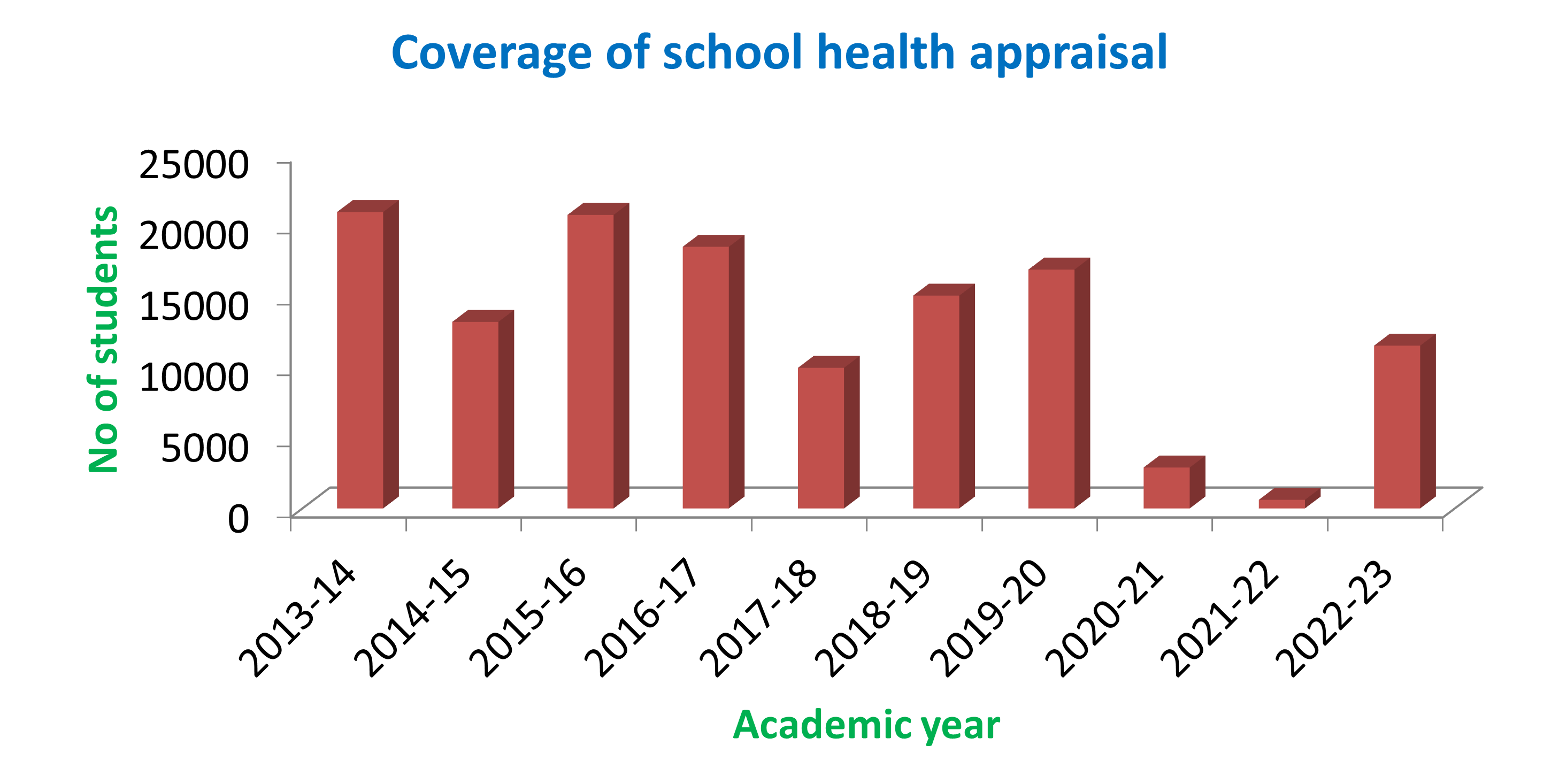
Graph showing Coverage of school health programme in last five years
The school health programme has been a successful event since years. This is evidenced by sustained reduction in the preventable morbidities among school children. There is also improvement in the reporting rates of illnesses among the school children this is due to improved awareness regarding the illnesses. The acceptability of health appraisal has enormously improved over years which is evidenced by increasing demand being posed by the school authorities to undertake the exercise. Six articles on different dimensions of school health programme are published in peer reviewed journals. As a result of Swachh Bharat- Swachh school abhiyana, most of the schools have been declared as plastic free zones. The recommendations pertaining to healthful school environments have helped the school authorities make infrastructural modifications in the schools.
Problems Encountered and Resources Required
Gathering the adequate resources for conducting school health programme is a challenge. Establishment of sustainable referral loop for the children from schools to hospital needs to be strengthened. We are planning to have a comprehensive school health database of all the children under JSS Mahavidyapeetha for which the IT resources are essential. Modern equipments for checking refractive errors, cardiovascular diseases, colour blindness, learning disabilities are required for further strengthening of school health appraisal programme.
SWASTHYA: Students Well-being Assessment, Support and Tracking for Healthy Youth and Adulthood
Context
To provide, preventive, promotive and curative primary health care to the school and college students studying in JSS educational institutions
Objective
- To assess the health status of the students studying in JSS educational institutions which include, pre schools, primary and secondary
- Schools, pre-university colleges and degree colleges - To provide point of care treatment to the illnesses and to refer the
- students in the need of special care to higher centers - To educate the students regarding prevention of illnesses and promotion of health.
The Practice
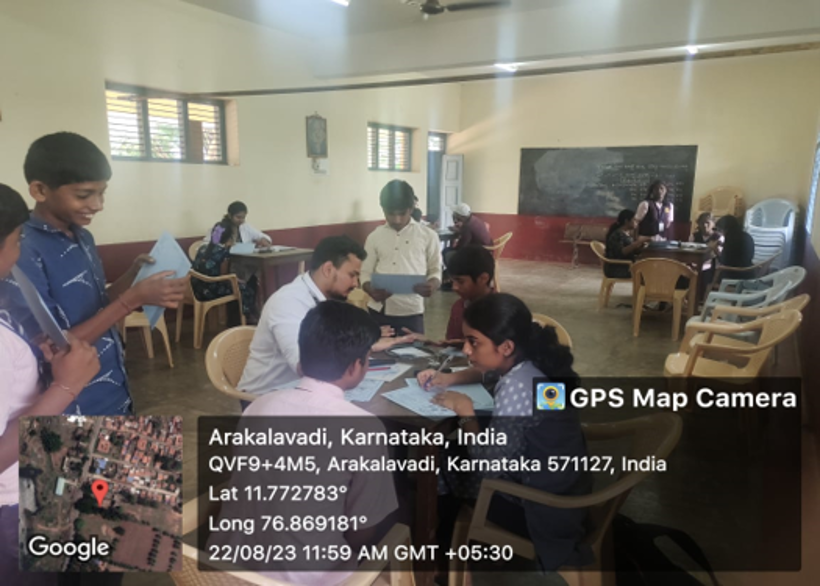
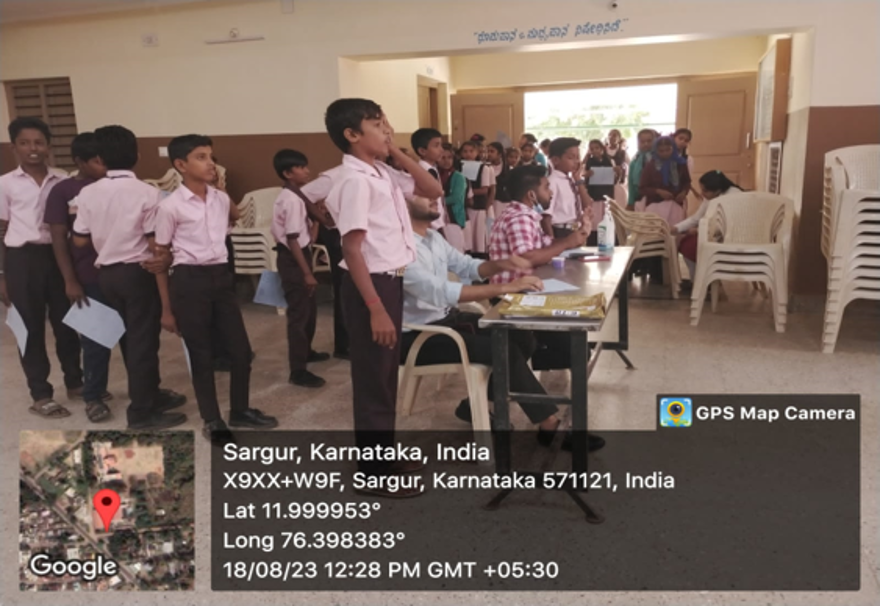
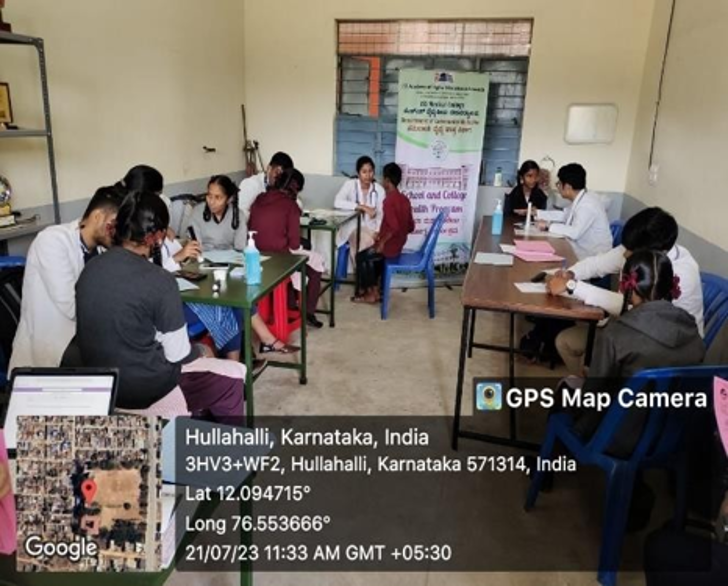
Anthropometric measurements for each student Examination by doctors: Each student is examined on the day of health checkup by doctor for physical examination treatment and referral. The student will be checked for vision, dental examination and for nutritional status along with the physical examination Health education: Health education for students will be given in groups to all the students based on their class of study and relevance of health education content for their age. Data management: Data is digitalized and managed in epicollect5 software. Feedback capturing feedback is taken from teachers regarding school Follow up: Every year follow up of students will be done in annual health checkups.
Impact
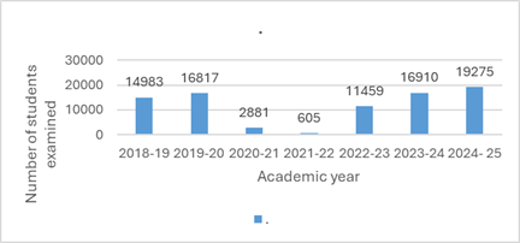
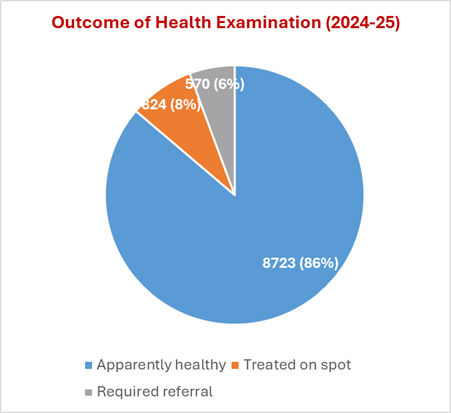
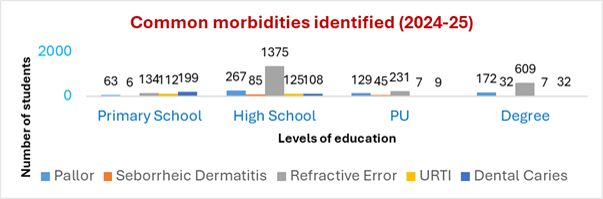
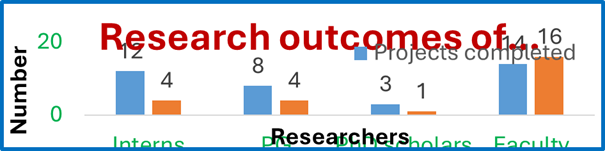
Research outcomes
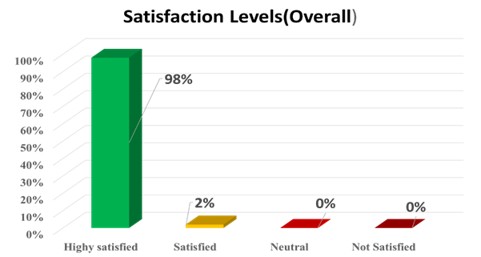
Feedback
| Academic year | Not satisfied | Neutral | Satisfied | |
|---|---|---|---|---|
| 2024-25 | Teacher (n=200) | Nil | 8% | 92% |
| Student (n=1000) | 6.1% | 10.8% | 83.1% |
Resources
The staff, post graduate students, lab technician, medico social worker and interns of the department as a team will be visiting the schools to deliver services
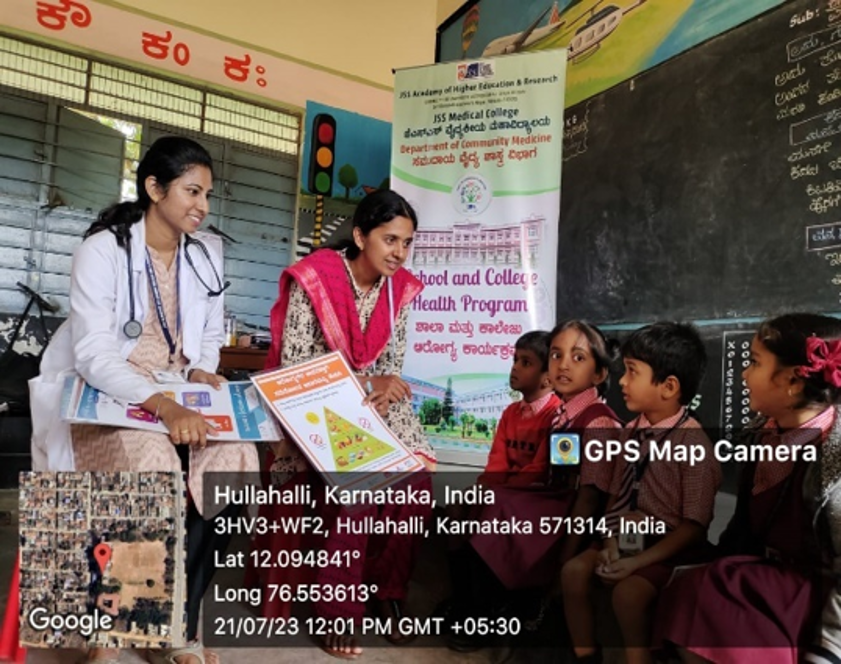
Geotagged photos
SOWKHYA
Context
Teachers are an important component of the educational system and have a sustained influence on the health, behaviour and development of students. Their own health and well-being can influence work performance, quality of life, absenteeism, productivity and their ability to serve as positive health role models.
SOWKHYA is conceptualised as an institutional best practice to move from episodic health care towards a proactive and preventive model. The programme combines annual health examination, screening for common NCD risk factors, health education and longitudinal monitoring of teachers' health trajectories.
Objective
To identify common health risks and screen for selected non-communicable diseases at an early stage.
To establish a baseline health profile for teachers and monitor their health trajectory over time.
Practice
The SOWKHYA practice includes annual health examinations to establish teachers’ baseline health status, along with screening for common NCD risks through blood pressure, random blood sugar and haemoglobin assessments. It also provides health education on nutrition, NCD screening, healthy behaviours and first aid, while maintaining health trajectory monitoring through periodic documentation and comparison of health indicators. Teachers with abnormal findings receive appropriate advice, referral and follow-up to facilitate timely evaluation and care.
Impact
SOWKHYA has the potential to create impact at the individual, institutional and educational-system levels by making teacher health a visible and measurable component of institutional well-being.
Research Outcomes
Establishment of a baseline health profile of teachers across participating educational institutions.
Longitudinal assessment of changes in selected health indicators over successive annual examinations.
SMART - Statistical Methods and Research Techniques
Context
The objective of this workshop is to provide biomedical researchers with hands-on training in the practical application of statistical methods using SPSS software. This program is designed to enhance researchers' ability to analyse and interpret data accurately, thereby improving the rigor and reliability of their research outcomes. Participants will gain practical knowledge of statistical techniques essential for their research work, ensuring they can confidently apply these methods to analyse complex datasets and derive meaningful, scientifically valid conclusions.
Objective
- To equip participants with a comprehensive understanding of both basic and advanced statistical techniques that are specifically relevant to biomedical research, utilizing SPSS software as a key tool.
- To enable researchers to effectively manage, analyse, and interpret complex biomedical data using SPSS, fostering a deeper proficiency in handling real-world datasets.
- To enhance participants' capacity to select and apply appropriate statistical methods tailored to various research designs, ensuring the accurate reporting of results in high-quality scientific publications.
The Practice
This two-day course is designed to provide an intensive, hands-on experience for professionals and students from medical, paramedical, and non-medical fields, focusing on the practical application of statistical methods in biomedical research. The program is structured to give participants the opportunity to work directly with real-life examples, ensuring that they develop practical skills in data analysis that are immediately applicable to their work.
The course offers a comprehensive curriculum that covers a wide range of statistical techniques essential for biomedical research. Participants will learn everything from basic descriptive statistics to more advanced methods such as hypothesis testing, regression analysis, and data visualization. This thorough approach ensures that both foundational and advanced statistical concepts are covered in a manner that is both accessible and relevant to researchers at various levels of expertise.
A key focus of the course is on software proficiency. Participants will receive expert instruction on the use of SPSS, R, and Excel, all of which are commonly used tools for statistical analysis in biomedical research. This multi-platform training ensures that attendees are well-equipped to handle data analysis tasks in whichever software environment they may encounter in their professional work.
The learning experience is further enriched through interactive elements, including group discussions, case studies, and live demonstrations. These activities are designed to foster collaboration, deepen understanding, and enable participants to apply the theoretical knowledge they acquire in real-world contexts. This dynamic and interactive approach ensures that participants leave the course with a solid understanding of both the theory and practical application of statistical methods in biomedical research.
Impact
Effectiveness of the Program (Pre-Post Analysis)
class="text-justify">Pre-workshop knowledge score: Participants had an average score of 4.86, with a high variation (±3.80), indicating varying levels of knowledge among them before the workshop.
Post-workshop knowledge score: After the workshop, the average score significantly increased to 8.71, with much less variation (±1.15), showing that most participants improved and reached a similar knowledge level.
P-value (<0.001): This very small p-value means the improvement in knowledge is statistically significant, confirming that the workshop effectively increased participants understanding.
| Knowledge Level Scores(N=150) | |||
| Pre Mean±SD | Post Mean±SD | P Value | |
| 4.86±3.80 | 8.71±1.15 | <0.001 | |
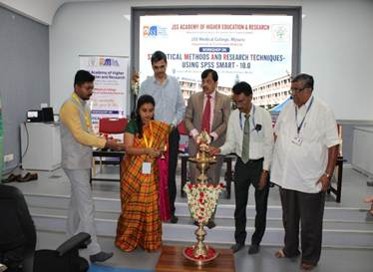
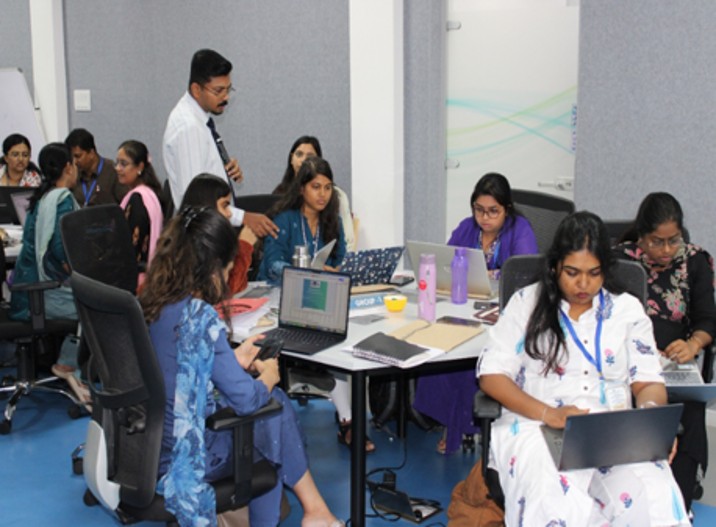
Photos from the Sessions
INSPIRE: Interns & Students Projects to Initiate Research Engagement
Context
The practice is developed in recognition of the importance of experiential learning in medical education. Students and interns need opportunities to move beyond theoretical learning and engage directly with real-world public-health problems, community needs and intervention strategies.
Objectives
- To provide students and interns with opportunities to undertake research and community-based projects.
- To enhance practical understanding of public-health issues and intervention strategies.
- To cultivate skills in data collection, data analysis and evidence-based decision-making.
Practice
Students and interns work under the guidance of experienced faculty members who provide mentorship and support throughout the project lifecycle.
Projects typically involve:
- Identifying a relevant public health issue.
- Designing and implementing a study or intervention.
- Collecting and analyzing data.
- Present findings and make recommendations for future action.
Impact
INSPIRE has enhanced the practical skills and professional competencies of participating students and interns. There are more than 250 projects were completed during the 2025-26 academic year, accompanied by a marked increase in student engagement and enthusiasm for public-health research.
Research Outcomes:
There has been more than 10 publications from the student projects in the year 2025-26
CHETANA: Community Health Education, Training and Awareness Promotion – Network for Action
Context
The Department of Community Medicine at JSS Medical College has developed CHETANA, a dedicated YouTube channel for sharing evidence-based health education and public health information. It offers simple, accessible content for medical students, health professionals, and the general public, extending learning and health education beyond the classroom and community visits.
Objectives
- To promote awareness about preventive health, healthy behaviours and disease prevention.
- To provide students with an easily accessible learning resource in Community Medicine and Public Health.
- To make reliable health information simple, understandable and accessible to the community.
- To use digital media to extend the reach of health education.
The Practice
CHETANA follows a digital-first, learner-centred and community-oriented approach.
Faculty-guided content is presented in an easy-to-understand format and covers relevant health and public-health topics. Students can access the content anytime for supplementary learning, while the community can access reliable health information at its convenience. Thus, CHETANA brings together: Teaching + Health Education + Community Outreach
Impact
| Beneficiary | Impact |
|---|---|
| Community | Improved access to simple and reliable preventive-health information. |
| Students | Convenient access to supplementary learning resources. |
| Faculty | A reusable digital medium to extend teaching beyond the classroom. |
| Institution | Strengthens digital innovation and community engagement. |
| Health System | Promotes prevention-oriented and community-centred thinking among future healthcare professionals. |
Research Outcomes
CHETANA provides opportunities for research in digital health education and communication, including assessing learner engagement, knowledge gain, and health-literacy outcomes.
 https://www.youtube.com/@CommunityMedicineJSSMC
E-MEDS – Electronic Museum of Epidemiology, Disease Prevention and Social Health
Context
E-MEDS – Electronic Museum of Epidemiology, Disease Prevention and Social Health is developed as a digital extension of conventional museum-based and demonstration-based teaching. It uses educational videos to provide students with an opportunity to observe, understand and revisit important concepts in Community Medicine at their own pace.
The initiative caters to both MBBS undergraduate students and postgraduate students in Community Medicine/Public Health, while also having potential relevance to other health-professional learners.
Objectives
- To develop a digital repository of Community Medicine teaching resources for MBBS undergraduate and postgraduate students.
- To facilitate visual and experiential learning through educational videos demonstrating important concepts, procedures, materials and public-health practices.
- To enable self-directed learning, allowing students to access and revisit educational content according to their individual learning needs.
Practice
E-MEDS follows a digital museum-based teaching model, in which important Community Medicine learning resources are converted into video-based educational content.
Impact
E-MEDS has the potential to create impact at multiple levels. E-MEDS has a positive impact on both learners and teaching by improving access to Community Medicine resources, facilitating visual and practical understanding, enabling repeated learning, and supporting self-directed and blended education. For postgraduate students, it serves as a useful resource for revision, academic presentations, undergraduate teaching, and reinforcement of epidemiological and statistical concepts. At the institutional level, it promotes digital innovation, technology-enabled medical education, academic resource development and community-oriented learning. As a reusable and expandable digital academic asset, E-MEDS can continue to benefit successive batches of students and potentially be shared across departments and institutions.
Research Outcomes:
E-MEDS provides an opportunity not only for teaching innovation but also for educational research and quality improvement.
Potential research outcomes include:
- Learning effectiveness
- Pre-test and post-test assessment
- Learner satisfaction
- Comparison of teaching methods